Carver engine sound and CAN bus
An engine sound for a small electric vehicle that follows its own CAN bus: a team project in my embedded-systems minor.
The problem
The vehicle’s CAN bus is undocumented. To make the engine sound follow speed and throttle, we first had to find out which messages carry which signal.
What I built
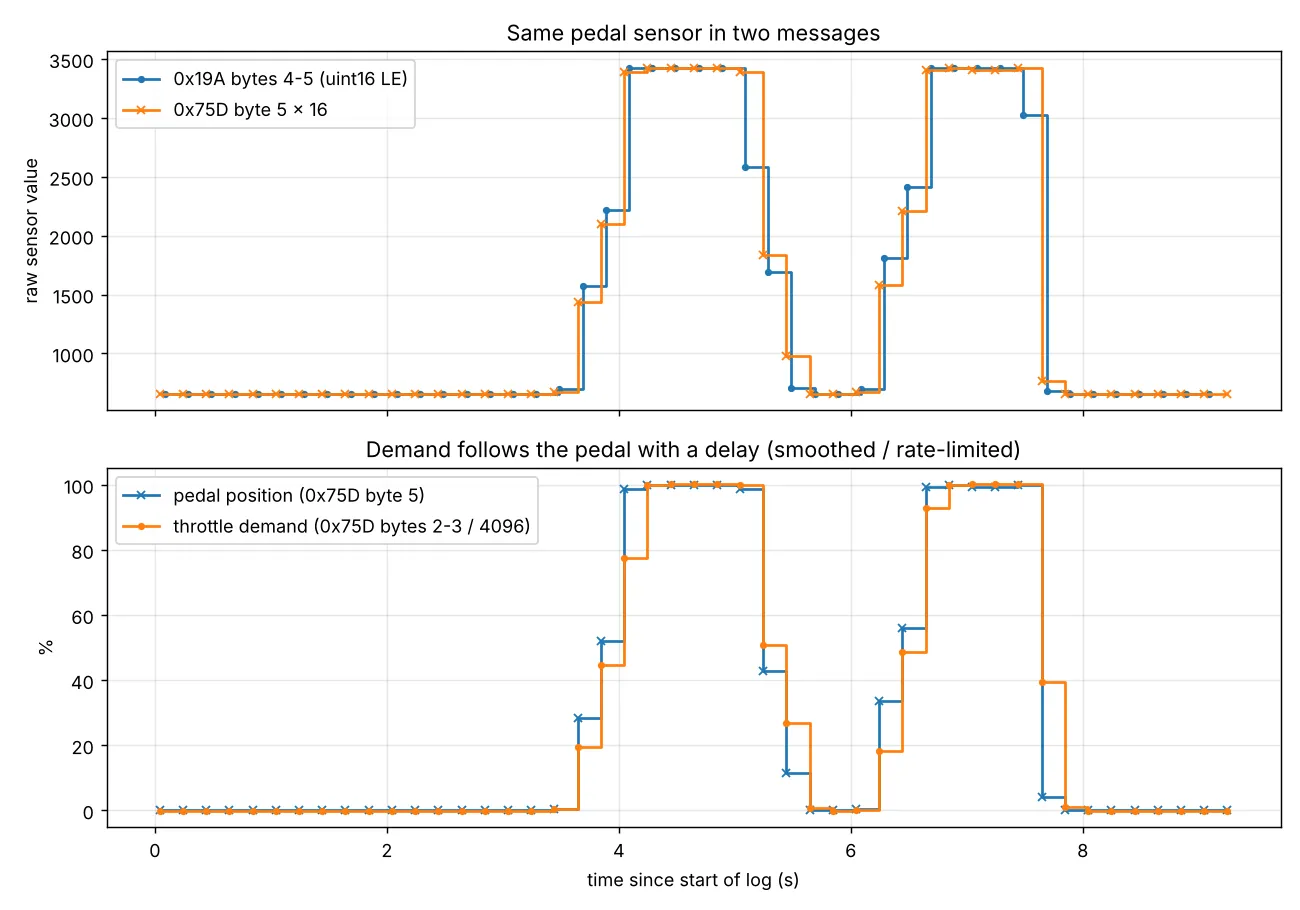
- A map of the CAN bus. I logged the bus in listen-only mode, one log per driving situation. Comparing idle against action pointed to candidate bytes, which were checked against a second source. The result is a DBC file with a confidence level per signal. The data also showed where the vehicle limits its torque, around 75 km/h, and when it brakes regeneratively.
- Advice on sound from a phone. I tested whether the phone could play the sound. Bluetooth audio adds about 120 to 330 ms of delay against a 30 ms requirement, so I advised keeping the sound on the microcontroller, with a phone app as a remote control over Bluetooth Low Energy.
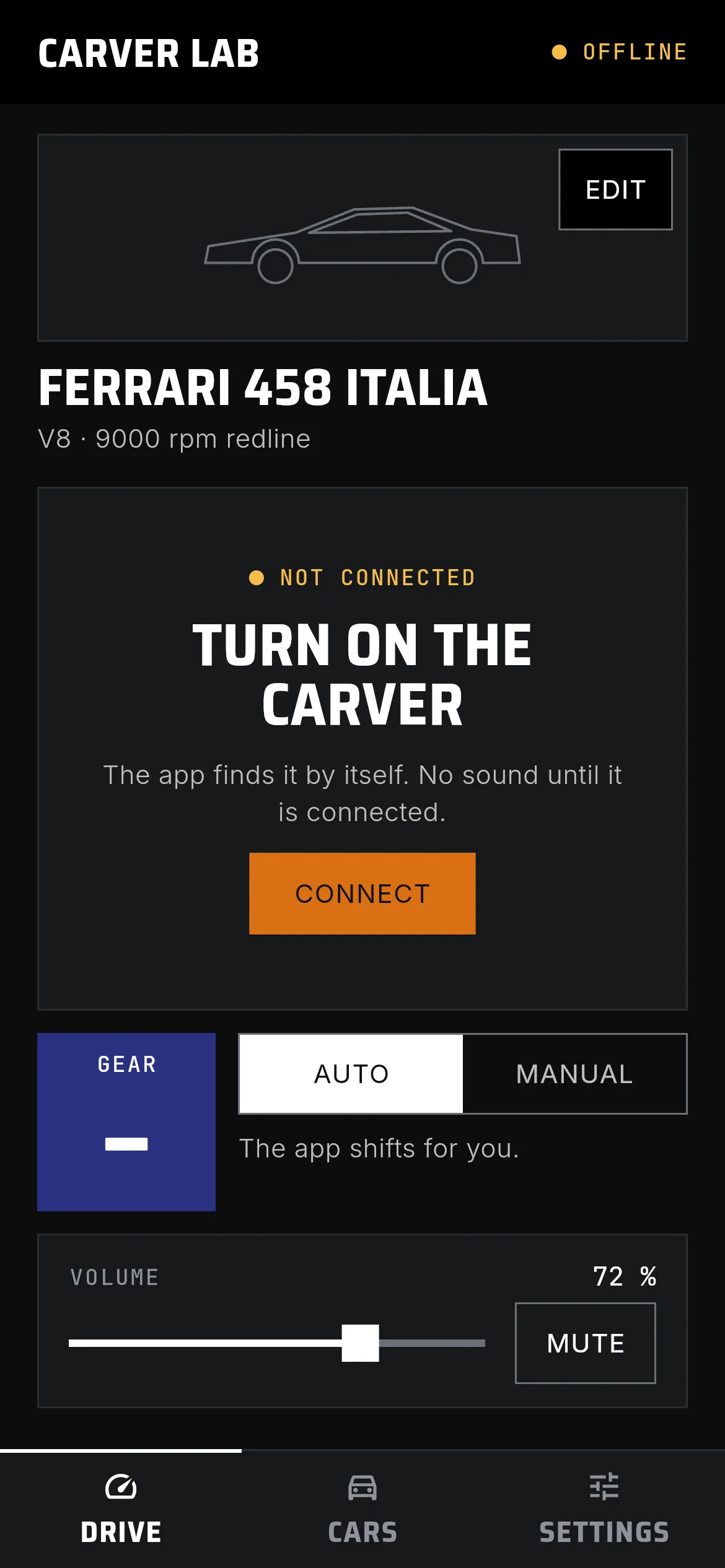
- Carver Lab, that app, in Flutter. It connects to an ESP32 over Bluetooth Low Energy, shifts automatically or by hand, and keeps car profiles with their cylinders, idle and rev limiter, and exhaust tone.
My part
In the team I did the CAN bus analysis and the research into sound from a phone, and I built the Carver Lab app.
Status
Work in progress. A detour from backend work: I enjoyed it, but my focus stays on software.